
Health Awareness

Understanding Early-Stage Cancer

Early cancer detection may lead to better outcomes.

Why diagnosing cancer early is important

When cancer is diagnosed at an early stage, when it not too big and has not spread, it is more likely to be treated successfully.

That’s why it’s important to keep up with recommended screening tests, attend routine GP check-ups, and see your doctor if you notice any unusual symptoms.

Detecting and treating cancer early may help:

What is Cancer Staging

Cancer staging is a way for doctors to describe the size and location of the cancer (or tumour), whether it has spread to nearby tissues or lymph nodes, and if it has spread to other organs. It also helps doctors know how to best treat the cancer and what the outlook or prognosis might be.

To determine the stage, doctors use various tests such as imaging scans, lab tests, biopsies, as well as a physical exam.

Understanding the Stages of Cancer

Most types of cancer are grouped into stages, numbered from 1 to 4, with some starting at Stage 0.

It’s important to note that some cancers use different staging systems, which may have differences in how stages are defined and named.

Everyone’s situation is unique, so if you have cancer, your doctor will explain your cancer stage and what it means for you.

The Stages of Cancer

At this stage, the cancer is small and localised, which means it is limited to the organ it started in.

Cancer at this stage may have grown larger than in Stage 1 but the cancer has not started to spread into nearby tissue. Sometimes the cancer may have spread to lymph nodes near the tumour.

At this stage, the cancer is generally larger and may have spread to nearby lymph nodes and surrounding tissues.

This stage, also known as metastatic or advanced cancer, indicates that the cancer has spread to other organs or other parts of the body.

Early-stage cancer

Early-stage cancer is used to describe cancer that is early in its growth, before it has spread to other parts of the body. Generally, Stage 4 cancers and some Stage 3 cancers are considered more advanced stages and not classified as early-stage cancers.


Pathways following an early-stage cancer diagnosis

In some early-stage cancers, treatment may not be done immediately and instead the doctors will monitor the cancer.

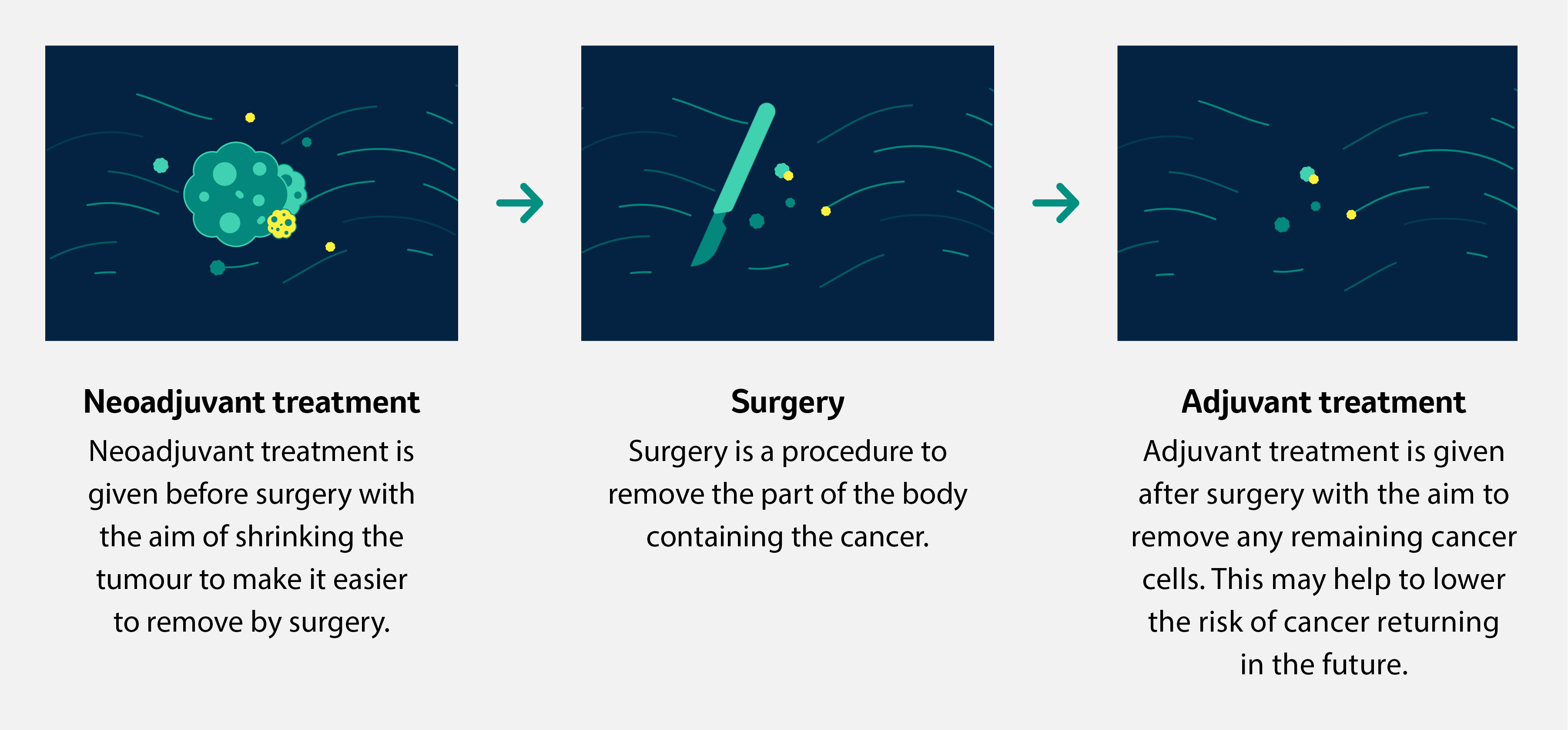
If treatment is recommended, it commonly involves surgery and this may be the only form of treatment that is required. For some types of early-stage cancer other therapies may be used alongside surgery to help shrink the tumour or reduce the risk of cancer returning.

Download our Early-Stage Cancer Care Resource

If you or a loved one is navigating an early-stage cancer diagnosis, this guide is here to help.

The booklet outlines the basics of:

  • Understanding the different stages of cancer
  • Pathways following an early-stage diagnosis
  • Benefits versus risks of early-stage cancer treatment

References:

  • Cancer Research UK. Why is Early Cancer Diagnosis Important? Available at: https://www.cancerresearchuk.org/about-cancer/spot-cancer-early/why-is-early-diagnosis-important. Accessed on: September 08, 2023.
  • Cancer Research UK. Stages of Cancer. Available at: https://www.cancerresearchuk.org/about-cancer/what-is-cancer/stages-of-cancer Accessed on: January 30, 2024.
  • National Cancer Institute. Cancer Staging. Available at: https://www.cancer.gov/about-cancer/diagnosis-staging/staging Accessed on: October 02, 2024.
  • American Cancer Society. Cancer Staging. Available at: https://www.cancer.org/cancer/diagnosis-staging/staging.html Accessed on: October 02, 2024.
  • Cancer Society New Zealand. Understanding Lung Cancer. Section 3: Staging Lung Cancer. Available at: https://www.cancer.org.nz/assets/Understanding-Lung-Cancer-booklet-2022-UPDATED.pdf Accessed on: April 04, 2023.
  • National Breast Cancer Foundation. Stage 1 or 2 – Early Breast Cancer. Available at: https://nbcf.org.au/about-breast-cancer/diagnosis/stage-1-2-early-breast-cancer/ Accessed on: September 08, 2023.
  • Cancer Society of New Zealand. Living Well with Advanced Cancer. Available at: https://www.cancer.org.nz/cancer/types-of-cancer/advanced-cancer/ Accessed on: October 26, 2023.
  • Cancer Research UK. Active Surveillance and Watchful Waiting for Prostate Cancer. Available at: https://www.cancerresearchuk.org/about-cancer/prostate-cancer/treatment/monitoring-prostate-cancer Accessed on: July 9, 2025.
  • Cancer Council Australia. Understanding Surgery: A Guide for People with Cancer, Their Families and Friends, 2023. Available at: https://www.cancer.org.au/assets/pdf/understanding-surgery-booklet Accessed on: September 03, 2023.
  • National Cancer Institute. NCI Dictionary of Cancer Terms. Adjuvant Therapy. Available at: https://www.cancer.gov/publications/dictionaries/cancer-terms/def/adjuvant-therapy Accessed on: June 26, 2019.
  • National Cancer Institute. NCI Dictionary of Cancer Terms. Neoadjuvant Therapy. Available at: https://www.cancer.gov/publications/dictionaries/cancer-terms/def/neoadjuvant-therapy Accessed on: October 26, 2023.

TAPS NP23508 TAPS DA 2514KN NZ-NON-00484 V2.0 Last updated October 2025

Health Awareness

Triple-negative breast cancer: risk factors, symptoms, and diagnosis

November 29, 2024

two women are talking and holding their hands.

Breast cancer is one of the most commonly diagnosed cancers in the world. There are many different types and subtypes of breast cancer that are defined by where in the breast they begin, how much they have grown or spread and how they behave. One of the more aggressive types is triple-negative breast cancer (TNBC).

What’s triple-negative breast cancer?

The tumours of patients with breast cancer may be tested for three receptors, or proteins, that make cancer grow. If the tumour tests negative for estrogen and progesterone receptors and does not over express HER2, then that patient is diagnosed with TNBC.

In New Zealand, around 3,500 people are diagnosed with breast cancer each year. About 10-20% of breast cancers are TNBC.

Risk factors for triple-negative breast cancer

Primary risk factors for TNBC include:

  • Sex: People assigned female at birth are at higher risk for TNBC compared to people assigned male at birth.
  • Age: TNBC is more common in women younger than other breast cancer types.
  • Genetic mutations: Mutations in genes such as BRCA1 and BRCA2 are strongly associated with TNBC.

What are the symptoms of breast cancer?

TNBC can have the same signs and symptoms as other common types of breast cancer. However,  signs and symptoms of breast cancer differ from person to person, and some will never show symptoms.

Here are some symptoms of breast cancer to watch out for:

  • Swelling of all or part of a breast
  • Skin dimpling
  • Breast or nipple pain
  • Nipple retraction
  • Nipple or breast skin that’s red, dry, flaking or thickened
  • Nipple discharge
  • Swollen lymph nodes, under the arm or near the collar bone

Many breast changes are not a sign of cancer, but it’s always important to have any changes checked by a doctor.

The Breast Cancer Foundation NZ recommends women start being breast aware from the age of 20.

This means understanding the usual look and feel of your breasts and checking for any changes.

How is triple-negative breast cancer diagnosed?

If you’re experiencing symptoms, speak with your doctor, especially if you have a higher risk of having TNBC. Some tests include:

  • A breast exam by a doctor: During a breast exam, your doctor will check your breasts for any possible signs of breast cancer or other breast problems.
  • Mammogram: An X-ray of the breast that allows doctors to look for changes in breast tissue. Mammograms can often find breast cancer early.
  • Magnetic resonance imaging (MRI): An MRI uses radio waves and strong magnets to make detailed pictures of the inside of the breast. Doctors use MRIs along with mammograms to screen people who are considered at high risk for breast cancer.
  • Ultrasound: An ultrasound uses sound waves and their echoes to make computer pictures of the inside of the breast. While not typically used as a routine screening test for breast cancer, an ultrasound can be useful for looking at some breast changes such as lumps – especially when they can be felt but not seen on a mammogram.
  • Biopsy: After a breast cancer diagnosis is made with a biopsy, a health care provider may determine whether a patient has TNBC with an assessment of cells from that biopsy, which are checked for estrogen, progesterone and HER2 receptors, to determine the cancer subtype.

What are the stages of triple-negative breast cancer?

Stage 0

Cancers diagnosed at stage 0 are confined to the milk ducts or lobules of the breast.


Stage 1

Cancers diagnosed at stage 1 are small, localised and have not spread beyond the lymph nodes closest to the breast.


Stage 2

Stage 2 TNBC may have spread regionally (beyond the initial site), but not beyond the lymph nodes in the underarm area.


Stage 3

Stage 3 TNBC has extended beyond the immediate region of the tumour and may have invaded nearby lymph nodes and muscles but has not spread to distant organs.


Stage 4

Stage 4 TNBC, also known as metastatic breast cancer, has spread distantly to other areas or organs of the body, such as the brain, bones, lung or liver.


For further information about breast cancer or if you notice any breast changes, please talk to your doctor.

If you require extra support if you’ve been diagnosed with breast cancer, it may be helpful to reach out to a patient organisation.

References:

Arnold M et al. Triple-Negative Breast Cancer: A Brief Review About Epidemiology, Risk Factors, Signaling Pathways, Treatment and Role of Artificial Intelligence. Breast. 2022:66:15-23.

Almansour NM. Triple-Negative Breast Cancer: A Brief Review About Epidemiology, Risk Factors, Signaling Pathways, Treatment and Role of Artificial Intelligence. Front Mol Biosci. 2022:9:836417.

American Cancer Society. 2021. Types of Breast Cancer. Available at: https://www.cancer.org/cancer/breast-cancer/about/types-of-breast-cancer.html Accessed: 08 April 2022.

Health New Zealand – Te Whatu Ora. 2024. Cancer data web tool. Available at: https://tewhatuora.shinyapps.io/cancer-web-tool/. Accessed 12 November 2024.

Breast Cancer Aotearoa Coalition. Triple negative breast cancer Available at: https://www.breastcancer.org.nz/triple-negative-BC Last Accessed: 21 October 2024.

Centers for Disease Control and Prevention. 2024. Symptoms of Breast Cancer. Available at: https://www.cdc.gov/breast-cancer/symptoms/index.html. Accessed: 12 November 2024

American Cancer Society. 2023. American Cancer society Society Recommendations for the Early Detection of Breast Cancer. Available at: https://www.cancer.org/cancer/breast-cancer/screening-tests-and-early-detection/american-cancer-society-recommendations-for-the-early-detection-of-breast-cancer.html Accessed 12 November 2024.

American Cancer Society. 2022. Breast cancer signs and symptoms. Available at: https://www.cancer.org/cancer/types/breast-cancer/screening-tests-and-early-detection/breast-cancer-signs-and-symptoms.html Accessed 12 September 2023.

American Cancer Society. 2022. Breast Cancer Risk Factors You Cannot Change. Available at: https://www.cancer.org/cancer/types/breast-cancer/risk-and-prevention/breast-cancer-risk-factors-you-cannot-change.html Accessed 14 September 2023.

American Cancer Society. 2022. Mammogram basics. Available at: https://www.cancer.org/cancer/types/breast-cancer/screening-tests-and-early-detection/mammograms/mammogram-basics.html 12 September 2023.

American Cancer Society. 2022. Breast MRI. Available at: https://www.cancer.org/cancer/types/breast-cancer/screening-tests-and-early-detection/breast-mri-scans.html Accessed 12 September 2023.

American Cancer Society. 2022. Breast ultrasound. Available at: https://www.cancer.org/cancer/types/breast-cancer/screening-tests-and-early-detection/breast-ultrasound.html Accessed 12 September 2023.

American Cancer Society. 2023. Triple-Negative Breast Cancer. Available at: https://www.cancer.org/cancer/breast-cancer/about/types-of-breast-cancer/triple-negative.html Accessed 9 March 2023.

Breast Cancer Foundation NZ. 2024. Taking care of your breasts in your twenties and thirties. Available at: https://www.breastcancerfoundation.org.nz/breast-awareness/taking-care-of-your-breasts/20-39 Accessed on 13 September 2024.

BreastNet NZ. Clinical breast examination. Available at: https://www.breastnet.nz/topic/clinical-breast-examination Accessed on 29 October 2024

National Breast Cancer Foundation. 2024. Stages 0 breast cancer overview. Available at: https://www.nationalbreastcancer.org/breast-cancer-stage-1/ Accessed 12 November 2024.

National Breast Cancer Foundation. 2024. Stages 1 breast cancer overview. Available at: https://www.nationalbreastcancer.org/breast-cancer-stage-1/ Accessed 12 November 2024.

Moffitt Cancer Center. 2023. Triple negative breast cancer stages. Available at: https://www.moffitt.org/cancers/triple-negative-breast-cancer/diagnosis/stages Accessed 13 September 2023.

National Breast Cancer Foundation. 2024. Stage 2 breast cancer overview. Available at: https://www.nationalbreastcancer.org/breast-cancer-stage-2/ Accessed 12 November 2024.

National Breast Cancer Foundation. 2024. Stage 3 breast cancer overview. Available at: https://www.nationalbreastcancer.org/breast-cancer-stage-3/ Accessed 12 November 2024.

National Breast Cancer Foundation. 2024. Stage 4 (IV) breast cancer. Available at: https://www.nationalbreastcancer.org/breast-cancer-stage-4/Accessed 12 November 2024.

American Cancer Society. 2024. Breast Cancer Stages. Available at: https://www.cancer.org/cancer/types/breast-cancer/understanding-a-breast-cancer-diagnosis/stages-of-breast-cancer.html 12 November 2024.

NZ-NON-00454 V1.0 Last Updated November 2024

Health Awareness

Helping protect health from birth to adulthood

April 1, 2024

a family siting on grass in a park

Vaccines are one of the greatest public health success stories in history.

They help protect against more than 20 potentially life-threatening diseases.

We recognise and support the many global health stakeholders, including the World Health Organization, for their efforts in raising awareness about the importance of vaccination and helping prevent infectious diseases around the world.

“Immunization is a global health and development success story…helping people of all ages live longer, healthier lives…It’s also one of the best health investments money can buy. Vaccines are also critical to the prevention and control of infectious disease outbreaks [and] underpin global health security…”

  • World Health Organization, 2023

Broader vaccination coverage along with other public health measures have eradicated smallpox and significantly decreased the incidence of other vaccine-preventable diseases.

Vaccine equity is a global challenge

The COVID-19 pandemic triggered unprecedented disruptions to vaccination programs around the world, resulting in the largest sustained decline in childhood vaccination rates in approximately 30 years.  

The pandemic also revealed underlying health inequities and reminded us of the importance of preserving trust in and advancing equitable access to vaccines.

Crowded street downtown

Global vaccination coverage dropped 5% between 2019 and 2021.

a child has a first aid plater on the harm

Between 2019 and 2021, the number of completely unvaccinated children increased by 5 million worldwide.

Recovering vaccination rates together

Now, more than ever, we have an opportunity to reimagine the role we all can play.

At MSD, our vaccines help prevent diseases affecting individuals around the world and across all stages of life, from infancy through older adulthood.

But, we can’t be successful alone. That’s why we are working with a variety of stakeholders to help build trust in vaccination and enable equitable global access to vaccination services for everyone who can benefit from them.

Through our work in vaccines, we are committed to helping protect people today and for generations to come.

a girl with her mother consult with a doctor

Globally, MSD and our legacy companies have a 130+ year history of innovation and commitment to helping prevent disease by discovering, developing, supplying and delivering vaccines.

To keep pace with the ever-evolving disease landscape, we go where the need is to find new ways to address complex public health problems. We continue to invest in groundbreaking research and breakthrough technologies to help protect against potentially life-altering vaccine-preventable diseases.

References:

World Health Organization. Vaccines and Immunization. Available at: https://www.who.int/health-topics/vaccines-and-immunization#tab=tab_1 Accessed on: 28 March 2023

Greenwood, B. The contribution of vaccination to global health: past, present and future. Philos Trans R Soc Lond B Biol Sci. 2014;369(1645):20130433

World Health Organization. Smallpox. Available at: https://www.who.int/news-room/questions-and-answers/item/smallpox Accessed on: 26 March 2023

World Health Organization. Smallpox Eradication Programme – SEP(1966-1980). Available at: https://www.who.int/news-room/feature-stories/detail/the-smallpox-eradication-programme—sep-(1966-1980) Accessed on: 23 April 2023

World Health Organization. Call to action: Vaccine Equity. Available at: https://www.who.int/campaigns/vaccine-equity/vaccine-equity-declaration Accessed on: 28 March 2023

UNDP Global Dashboard for Vaccine Equity Available at: https://data.undp.org/vaccine-equity/ Accessed on: 28 March 2023

Abrams EM & Szefler SJ. COVID-19 and the impact of social determinants of health. Lancet Respir Med. 2020(8):659-661.

Paremoer L et al. Covid-19 pandemic and the social determinants of health. BMJ. 2021;28:372:n129.

World Health Organization. COVID-19 pandemic fuels largest continued backslide in vaccinations in three decades. Available at: https://www.who.int/news/item/15-07-2022-covid-19-pandemic-fuels-largest-continued-backslide-in-vaccinations-in-three-decades Accessed on: 22 September 2022

Perry BL, Aronson B & Pescosolido BA. Pandemic precarity: COVID-19 is exposing and exacerbating inequalities in the American heartland. Proc Natl Acad Sci USA. 2021;118(8):e2020685118.

World Health Organization. 2022. Immunization Coverage. Available at: https://www.who.int/news-room/fact-sheets/detail/immunization-coverage Accessed on: 21 September 2022

Centers for Disease Control and Prevention. Morbidity and Mortality Weekly Report. Routine Vaccination Coverage – World wide, 2021. Available at: https://www.cdc.gov/mmwr/volumes/71/wr/mm7144a2.htm Accessed on: 20 March 2023

Centers for Disease Control and Prevention. Overview, History, and How the Safety Process Works. Available at: https://www.cdc.gov/vaccinesafety/ensuringsafety/history/index.html Accessed on: 13 April 2021

Centers for Disease Control and Prevention. Recommended Adult Immunization Schedule United States 2023. Available at: https://www.cdc.gov/vaccines/schedules/hcp/imz/adult.html Accessed on: 27 February 2023

Centers for Disease Control and Prevention. Recommended Child and Adolescent Immunization United States Schedule 2023. Available at: https://www.cdc.gov/vaccines/schedules/hcp/imz/child-adolescent.html Accessed on: 15 February 2023

NZ-NON-00403 TAPS: NP20725 Last Updated on March 2024

Health Awareness

5 facts about lung cancer

What everyone needs to know about one of the most common types of cancer

November 3, 2023

article hero thumbnail

In 2020, it was estimated that more than 2 million people were diagnosed with lung cancer, changing their lives and setting them on a path that they likely didn’t anticipate and that no one wants to travel. MSD is fighting for these patients and their families by advancing research and fostering greater awareness and understanding of the disease.

Here are five facts about lung cancer that we think everyone needs to know.

01.

Every person with lung cancer deserves compassion and support.

People with lung cancer may face social stigma if they have smoked in the past. But, the truth is, there is no room for blame. Every person diagnosed with lung cancer experiences similar kinds of challenges as anyone who learns they have cancer. People with lung cancer are worthy of all the compassion and support their families, care teams and the wider cancer community can provide to help them stand against this disease.

Caregiver holding patient's hand

02.

It takes a village to navigate life with lung cancer.

When coping with a lung cancer diagnosis, it’s important to build a circle of support that includes the oncologist, health care teams, family and friends.

Connecting with others can provide a sense of support and comfort to help patients through everything that goes into managing this disease.

“Life for people with lung cancer seems like it’s completely broken and changed – days are full of doctor appointments and tests. Living with lung cancer seems to become the new normal.”

Dr. Cathy Pietanza, an oncologist and distinguished scientist at MSD Research Laboratories

03.

There’s no one type of person who develops lung cancer.

Lung cancer strikes both men and women. While it is mostly diagnosed in older people, younger people can develop the disease. In fact, in 2020, more than 285,000 cases of lung cancer were estimated to be diagnosed worldwide among people 54 years and younger.

Crowded street downtown

04.

There are multiple risk factors for lung cancer, including some outside our control.

Smoking is the greatest risk factor for developing lung cancer, but there are others as well, including having a family history of the disease and exposure to certain environmental substances.

Environmental risks include

  • Radon gas
  • Exposure to asbestos, second-hand smoke and other carcinogens in the air, such as arsenic, chromium and nickel

05.

Scientific advances are making an impact in lung cancer.

Over the past decade, scientific advances have helped lead to more survivors.

Researcher in lab coat

View infographic

References:

American Cancer Society. Adjusting to life with cancer. Available at: https://www.cancer.org/treatment/survivorship-during-and-after-treatment/coping/adjusting-to-life-with-cancer.html Accessed on: 13 November 2023

American Cancer Society. Lung cancer risk factors. Available at: https://www.cancer.org/cancer/lung-cancer/prevention-and-early-detection/risk-factors.html Accessed on: 1 October 2019

American Cancer Society. Survivorship: During and After Treatment. Available at: https://www.cancer.org/treatment/survivorship-during-and-after-treatment/ Accessed on: 7 January 2021

American Lung Association. Your lung cancer team. Available at: https://www.lung.org/lung-health-diseases/lung-disease-lookup/lung-cancer/patients/lung-cancer-team/ Accessed on: 22 November 2022

Febbraro M, Gheware A, Kennedy T, Jain D, de Moraes FY, Juergens R. Barriers to access: global variability in implementing treatment advances in lung cancer. Am Soc Clin Oncol Educ Book. 2022;42:1-7. doi:10.1200/EDBK_351021

WHO Global Cancer Observatory Estimated age-standardized incidence rates (world) in 2020, world, females, all ages (excl. NMSC). Available at: https://gco.iarc.fr/today/online-analysis-multi-bars?v=2020&mode=cancer&mode_population=countries&population=900&populations=900&key=asr&sex=1&cancer=39&type=0&statistic=5&prevalence=0&population_group=0&ages_group%5B%5D=0&ages_group%5B%5D=17&nb_items=10&group_cancer=1&include_nmsc=0&include_nmsc_other=1&type_multiple=%257B%2522inc%2522%253Atrue%252C%2522mort%2522%253Afalse%252C%2522prev%2522%253Afalse%257D&orientation=horizontal&type_sort=0&type_nb_items=%257B%2522top%2522%253Atrue%252C%2522bottom%2522%253Afalse%257D Accessed on: 9 December 2022

WHO Global Cancer Observatory Estimated number of incident cases worldwide, both sexes, ages 0-54. Available at: https://gco.iarc.fr Accessed on: 18 November 2022

WHO Global Cancer Observatory Estimated number of new cases in 2020, world, both sexes, all ages. Global Cancer Observatory. Available at: https://gco.iarc.fr/today/online-analysis-table?v=2020&mode=cancer&mode_population=continents&population=900&populations=900&key=asr&sex=0&cancer=39&type=0&statistic=5&prevalence=0&population_group=0&ages_group%5B%5D=0&ages_group%5B%5D=17&group_cancer=1&include_nmsc=1&include_nmsc_other=1 Accessed on: 18 November 2022

WHO Global Cancer Observatory Lung cancer fact sheet. Available at: https://gco.iarc.fr/today/data/factsheets/cancers/15-Lung-fact-sheet.pdf Accessed on: 18 December 2020

WHO Global Cancer Observatory World Cancer Fact Sheet. Available at: https://gco.iarc.fr/today/data/factsheets/populations/900-world-fact-sheets.pdf Accessed on: 12 October 2022

GO2 For Lung Cancer. Available at: https://go2.org/lung-cancer-stigma/ Accessed on: 18 November 2022

TAPS Approval No: NP20080 NZ-NON-00404 Last Updated on October 2023

Innovation

Women in science? Absolutely.

Strong career paths and cutting-edge science draw more women to our small molecule process R&D team

October 30, 2023

Four women scientists wear marks and glasses in a lab

Women scientists have historically been underrepresented in the field of process research and development — the space between drug discovery and manufacturing.  However, over the past seven years, the percentage of women on our company’s small molecule process research & development (SM PR&D) team has nearly doubled and continues to grow.

Jamie McCabe Dunn stands in front of a bookcase

“This progress is important because it reflects our mindset that diversity and inclusion fuel creativity and innovation.”

Jamie McCabe Dunn

Director, process chemistry

“Our group today looks dramatically different than it did when I first started 14 years ago because we’ve taken steps to build more diverse teams,” said McCabe Dunn.

And, women chemists and engineers are vital to our success.

“While we’ve come a long way in the last decade, achieving greater gender equity must continue to be a priority for all leaders,” said Kevin Campos, vice president.

One successful approach has been for women leaders to take more active roles in recruiting talent. This allows  for greater relationship building among female candidates applying for jobs in science fields and provides a vision for growth opportunities at our company.

“We’re also expanding relationships with more academic institutions and casting a wider net to find excellent talent,” said McCabe Dunn. “As more women join the company and see the strong career paths open to them, we expect to see even greater diversity.”

A woman chemical engineer in a male-dominated field

Eighteen years ago, when Marguerite Mohan joined MSD, she was one of a small group of women scientists on the team. Although not different from what she experienced academically, she recalls being asked whether she thought this environment would limit her.

Marguerite Mohan

“I had no concerns being in the gender minority…I knew I was here because of my ability.”

Marguerite Mohan

Executive director, chemical engineering, SM PR&D

“I loved being a chemical engineer and wanted to apply my skills where I’d make an impact on people’s lives. The interface of research and manufacturing was a great place to start,” said Mohan.

Tasked with developing and scaling up processes to safely, innovatively and robustly produce drug candidates for clinical trials and commercial use — these teams deliver for patients through cutting-edge science.  They challenge the status-quo and try new things. That’s also how they recognize and develop talent.

“We’re committed to making sure everyone’s voice is heard and respected. This has allowed women to frame what technical growth looks like from our point of view, bringing diversity of thought to the problem-solving and leadership table,” said Mohan. “By challenging the status quo, we’re creating stronger, more innovative teams filled with unique scientific talent.” 

A new generation of women scientists

Niki Patel and Cindy Hong joined our company within the past six years — both drawn, in part, to our reputation as a scientific leader committed to improving human health.

“I was very aware of the team’s novel and innovative science through publications in high-profile, peer-reviewed journals and presentations at conferences. This was a place where I wanted to do great science,” said Patel, associate principal scientist. 

It was also a place where both Patel and Hong knew they’d fit in.

Cindy Hong

“As a female graduate student, I was definitely outnumbered. But, when I interviewed here, I saw such diversity on the teams – including at leadership levels.”

Cindy Hong

Associate principal scientist

“I knew this environment was right for me,” said Hong. “I’ve worked with great female and male leaders since joining the company and been exposed to many different areas of expertise. I see real opportunities for growth.”

Women empowering other women in science

Strong networks and outreach are important to not only maintain a pipeline to potential female scientist candidates but also retain and promote those already on the team. They can include things like collaborative communities, mentor programs, publishing papers or grassroots efforts.

Niki Patel

“We’re empowered to take steps to support women in this field.”

Niki Patel

Associate principal scientist

“For example, I’ve helped organize forums to discuss topics on diversity and inclusion and participated in career panels geared toward supporting women and underrepresented groups in the field,” said Patel.

Sometimes, that support might simply be a quick note of recognition.

 “I try to acknowledge micro-accomplishments in the moment — things that seem small but are important to that person,’” said Mohan. “It’s a simple, personal way to show someone they — and their work — matter.”

In addition to kudos from colleagues, many of our female scientists have been recognized externally. In the last three years, 12 women in the department have been honored with individual awards or as key contributors in team awards. These awards include the ACS Division of Organic Chemistry Early Career Investigator, ACS WCC Rising Star, ACS Fellow, Heroes of Chemistry, the Edison Patent Award, the ACS Award for Computers in Chemistry and Pharma, and an HBA Rising Star.

“We have a high success rate,” said McCabe Dunn. “Ninety-two percent of the women we’ve nominated or renominated for individual awards have won.”

Can women have a successful career in science?  Absolutely. As Mohan says, “Know your core, be true to it and value what makes you a unique asset.”

a scientist in a lab

Are you interested in a career in R&D?

NZ-NON-00199 Last Updated October 2023